Taco Bell Sweden takes control of a new market in record time with Edda
“Four openings in 35 days. Sales per labour hour up 42%, prep time down 29%, and an operational foundation built to scale.”


Jonathan
COO at Taco Bell Scandinavia

Daniel Guilbert
Head of operations at Taco Bell Scandinavia

André Mårtensson
Operations lead at Taco Bell Scandinavia
Taco Bell Scandinavia opened four restaurants in Sweden in just 35 days. Within a few months, the team had brought key operational KPIs under control, significantly faster than the typical six-to-seven-month ramp-up for a new market. Edda.ai has played an important role in giving the team the visibility and operational structure needed to scale at that pace.
The challenge: Four openings in 35 days
Launching a new market is one thing. Building the operational structure to support rapid growth is another.
Taco Bell opened its first Swedish restaurant on Vasagatan in Stockholm on November 24, 2025, followed by Täby, Farsta and Stadshagen. The four restaurants opened within just 35 days, creating an immediate need for a consistent way to follow performance and manage operations across the growing network.
Edda was rolled out at the end of January, connecting sales, staffing and operational performance across the restaurants and giving both restaurant managers and head office a shared view of the business.
The impact was visible quickly. Between January and March, sales per working hour increased by 42%, while labor cost percent fell from 38% to 26.5%.
When you open four restaurants in 35 days, you don’t have the luxury of spending six months figuring out how to operate the market. You need visibility and control from the beginning.”
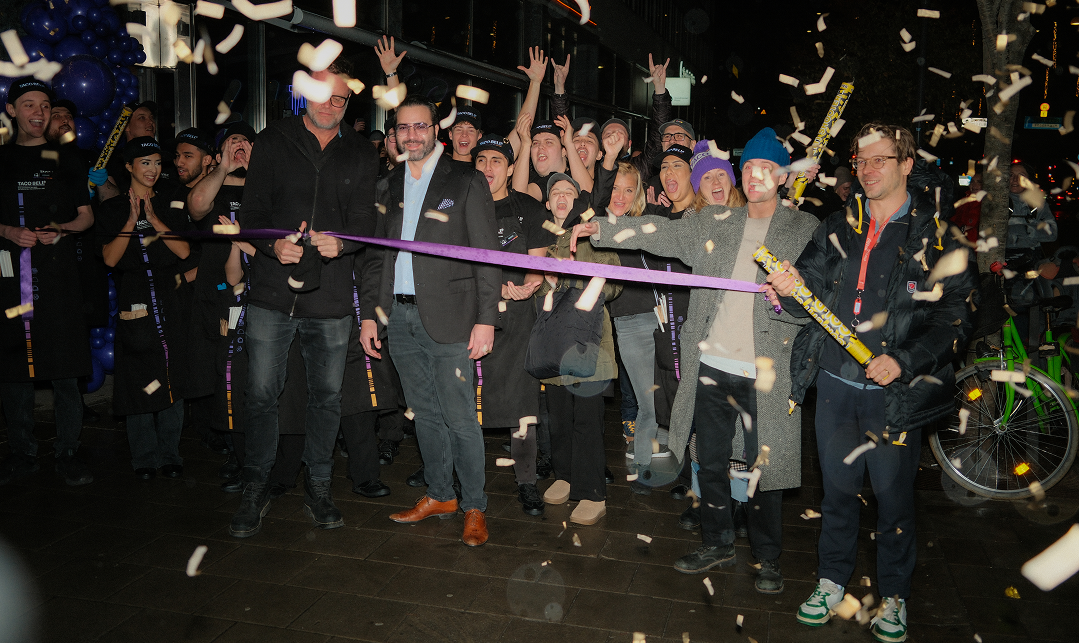 From the opening of Taco Bell on Vasagatan in Stockholm.
The solution: Every restaurant, every hour, in Edda
For Taco Bell, the focus is not simply on tracking costs, but on improving efficiency.
With Edda, the team has moved from a largely manual workflow to a more connected, digital process.
Previously, staffing involved moving information between Oracle, Personalkollen and spreadsheets. Today, sales forecasts are entered directly into Edda, which pulls employee data from the existing system and turns the forecast into staffing requirements at shift level.
We’ve gone from moving between several systems and spreadsheets to having a much more connected process. The forecast and staffing requirements are now much easier to work with.”
Kitchens 29% faster, even in the rush
Edda reads the prep time for every order from the kitchen display, so each manager can see which hours and which restaurants are slowing down.
From June to September, median prep time across the five restaurants fell by 29%. The share of orders ready within five minutes rose by 60%, and the slowest tenth of orders became 30% faster.
In the busiest hours of the restaurant, median prep time fell by 22%.
With Edda, every manager sees the kitchen time for every hour. When everyone looks at the same number, it starts moving.”
Built to scale
The real test of an operating model is whether it can be repeated.
In June 2026, Taco Bell opened its fifth Swedish restaurant at Mall of Scandinavia. It ran on Edda from day one and became the group's busiest restaurant within its second month.
In its first two months, staff cost as a share of sales fell by 26% and sales per labour hour rose by 38%. From June to September, median prep time fell by 47%, the biggest improvement in the group.
With Copenhagen next on the roadmap, Taco Bell will be able to use Edda to bring the same structure and visibility to new locations from the start, following sales, staffing and operational performance in one place.
As we move into new markets, we need to know that what works in Sweden can be replicated. Edda gives us a common operational foundation that we can take with us as we grow.”
For Taco Bell, the goal is not simply to open more restaurants. It is to build an operating model that becomes more efficient, more connected and easier to scale with every new market.